What I Wish I Knew Before Starting Genealogy: 7 Lessons From a Professional

Now that I’m a professional genealogist with hundreds of hours of educational courses and study under my belt along with triple that in research time, I look back at my early genealogy work as a hobbyist and cringe a little. Unfortunately, some of my errors are requiring untangling years later, when in an ideal world, most of my personal family research would be quite far along given the time I’ve spent on it. To help you learn from my mistakes, here are seven lessons I wish I knew before I took on genealogy as a hobby.
1. A Citation-First Approach: Unsourced Facts Don't Belong in Your Tree
It can be tempting when you’re getting started to follow what others have shared about family history using online trees, regardless of if those trees have sources to back up their claims. When I first started using Ancestry decades ago, I got hooked on adding ancestors like it was a video game, not thinking about the rigorous academic standards I knew existed for true research. Now, I often am stuck saying things like “I believe their parents were X and Y, however, I’m still confirming that research.” I dearly wish that my younger self had understood that every fact I claimed for an ancestor — every date, relationship, experience, or location — needed supporting evidence in the form of records and research. After all, the fun part of genealogy is learning the true history of our ancestors, and that falls apart if there’s no evidence of truth! If I’d worked a little more slowly and carefully in the beginning, I wouldn’t be spending hours now cleaning up Past Janelle’s mistakes.
2. Preserve High-Resolution Scans of Family Documents Immediately
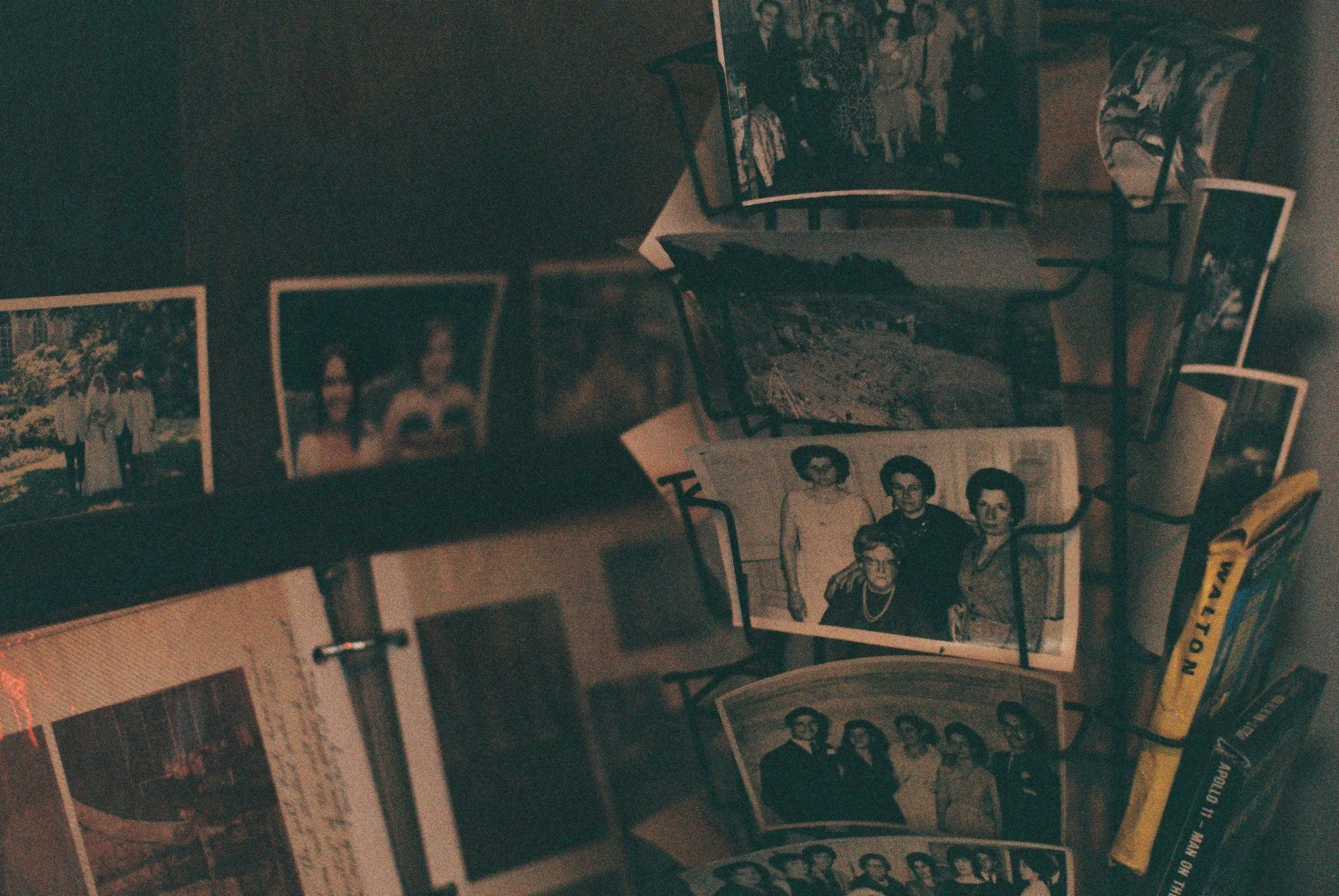
In the early days of this hobby, I kept 100% of my research on Ancestry, not knowing that sometimes rights to records change or that other trees could take down their images. I also didn’t think to take photos or scans of family photographs other relatives had, that now due to the years have gone into corners of the family that are lost to me. There were a few records and images that I downloaded in order to email them to my parents or siblings who weren’t yet on Ancestry, but I didn’t keep these files organized, making it difficult to find what I even have (more on that in a bit…). Learn from my mistakes: anything you find that is relevant to your research, save a good copy outside of a subscription service.
3. Verify Family Stories and Oral Histories with Primary Records
In some ways, this is similar to needing records to back up any facts regarding your ancestors. However, sometimes a record IS just a written narrative of family stories or a documentation of an oral history, and let’s be honest that people are unreliable narrators in the best, most current situations. And in some cultures, oral histories are a bedrock of how people have maintained their history in the face of governmental oppression, such as for the Indigenous people of North America, so saying every fact needs a record gets more complicated.
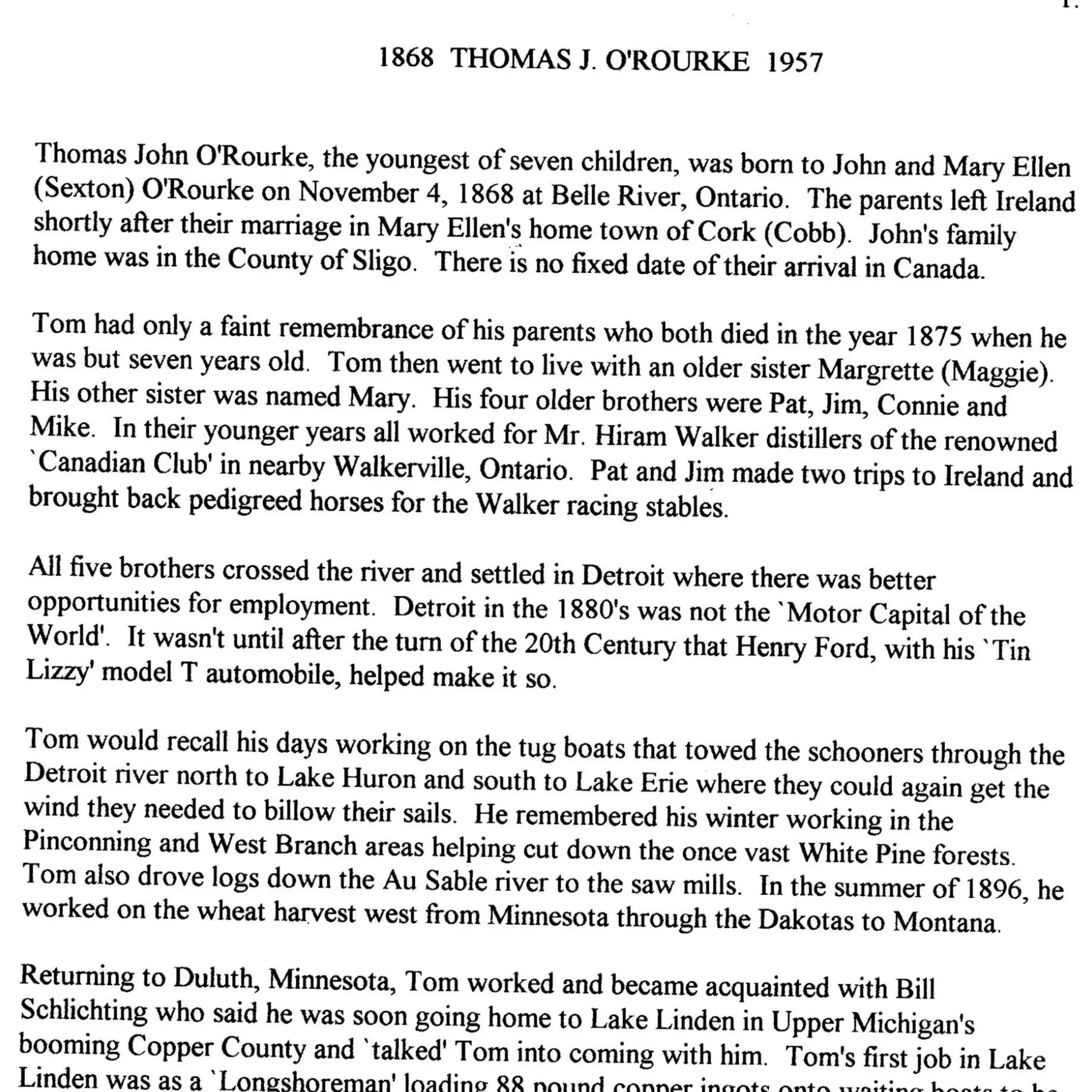
An excerpt of a narrative written by Gordon O’Rourke about his father and grandparents. Only some of this is true, and the details about Thomas’s parents and their origins are entirely incorrect.
In a best case scenario, we can take the family stories and oral histories and compare them to the historical records and find confirmation. But that’s not always what happens. In my family, I received a 10 page document that was written by my great uncle Gordon O’Rourke about the lives of his siblings, parents, and other ancestors. The details he included about his siblings and, to a certain extent, his parents, have now been backed up by other evidence from records, and also added some commentary on these lives that you might not get from a census, vital record or land transaction, which is great. However, the information he included regarding his paternal grandparents turned out to be mostly false, and it’s unclear where it originated. Because of his narrative, I spent over a decade hunting for records in Canada and Ireland that didn’t exist, because the basic facts I’d thought he had right were incorrect. Unfortunately, by the time I realized this, he had passed away, and I was unable to discuss the narrative with him.
4. Interview Living Relatives Early to Preserve Family Memories
Related to the above two points, like many people, I wish I had interviewed my elders while they were still alive. I was incredibly lucky to have my two paternal grandparents live well into their 90s, with my grandpa dying at 94 and my grandma just three months shy of her 100th birthday. She was still alive when I started getting into family history, but I only remember bits and pieces of the stories she told me over the years.
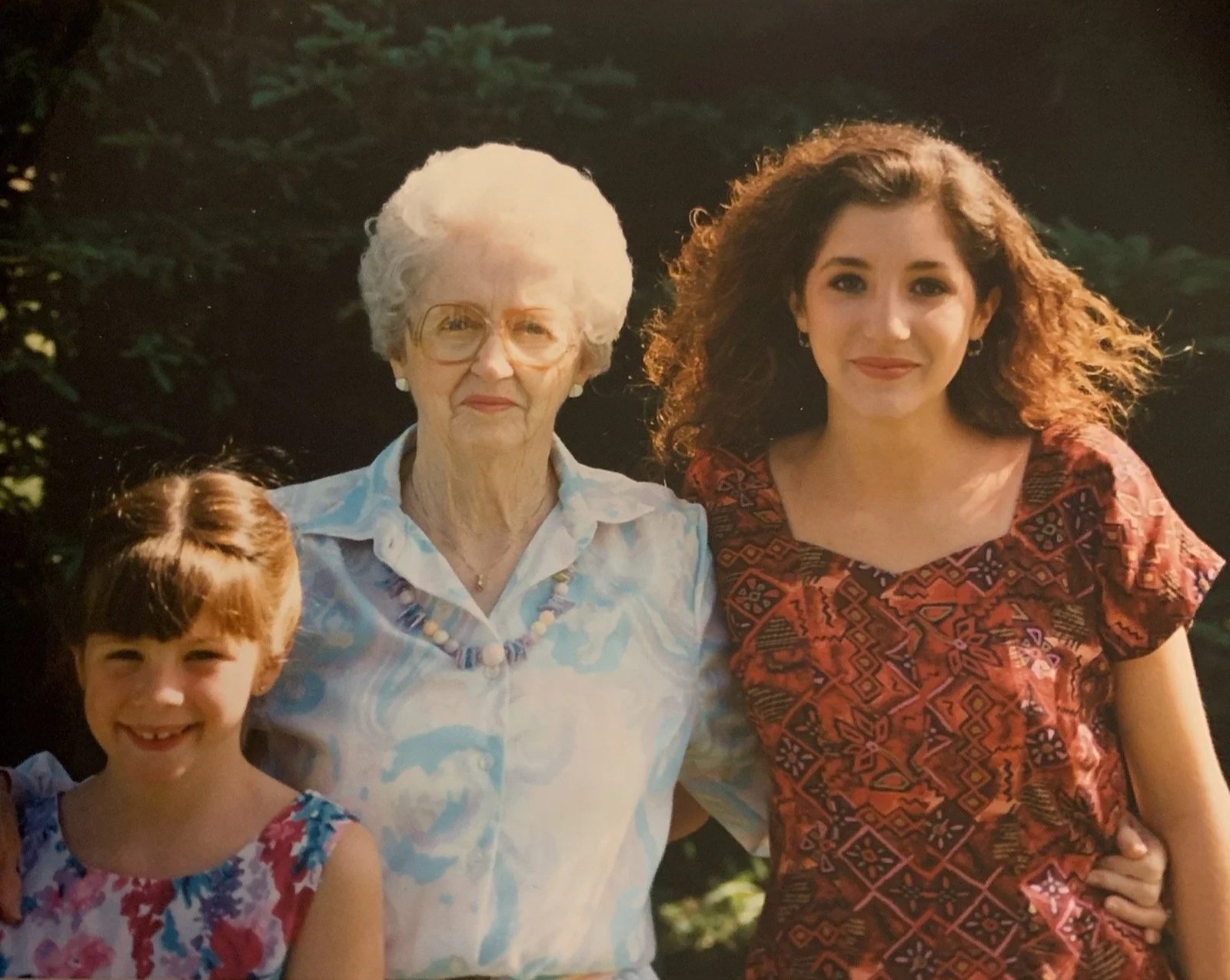
Myself, my grandmother Eileen (O’Rourke) Asselin, and my sister Chantel around 1990.
However, I was also their second to last grandchild out over around 35 grandchildren total, and I was only 6 years older than their first great grandchild, with many more following. The one week a year I spent with my extended family in Upper Michigan gave me some very happy memories but didn’t always include a lot of time to sit down and talk one on one with anyone. Plus, as a teen and early 20-something, I didn’t really think about recording their stories, and of course the available tools of the time made that more difficult too. Today, I can meet with a family member and record conversations on my phone, or by taking notes, and preserve some of the details that otherwise would be lost to time. I will always wish I had spent more time asking my elders, especially my grandparents, more questions about their lives.
I’ll write a future blog about conducting interviews and recording this type of history, because as a former journalist, I have gotten better with this over time. But for now, remember two key points: don’t be afraid to ask and listen to stories about your elders’ lives and at minimum write down notes as soon as you are able, if you aren’t able to record the conversation.
5. Establish Consistent Research, Naming, Documenting, and Filing Standards from Day One
Thanks to a historian friend, I’ve gotten on a really good track with this over the past few years. But I still have digital folders FULL of files that I have no idea where they came from and can’t figure out what they are without opening them, because they have file names like laisuo389d84nfld.jpg from wherever I downloaded them. Here’s how I manage my files and keep them organized today:
Download or scan a high quality copy of the file
Name with my preferred format: Surname First Name_Year_Description_Location_Page #_Source of file or as an example Rourke John_1871_City Council Minutes May 4_Maidstone Essex Co Ontario CAN_P320_FS [for FamilySearch] or Asselin Urgel_1957_Asselins Dairy Sale Transaction Sheet_Norway Dickinson Co Michigan US_WHS [for Wisconsin Historical Society]
Move file into appropriate folder — I have one for maternal and one for paternal, and with the format above can sort to see everything for each person easily
Log record into my Citations Database spreadsheet, where I track type of record, who is mentioned, date, link to online repository or details from repository, citation, and link to file in my Dropbox
Log record in my genealogy software (I use Ahnenblatt) by adding the citation, a link to the file on Dropbox, and the media file (jpg, pdf, etc)
6. Look Beyond Ancestry & FamilySearch: The Power of Offline Repositories
This is another one that I wish I could shout from the rooftops, truly. Look, on the one hand, we are in a golden age for record access, with the internet and the ongoing interest in genealogy driving a lot of digitization that genealogists prior to the last couple of decades would envy. That’s awesome! But on the other hand, given how easy it is to sit on your computer at home and add records to an Ancestry or FamilySearch tree, many beginner genealogists don’t look beyond these sites and sometimes even beyond the most common records for genealogy: censuses and vital records like birth certificates.
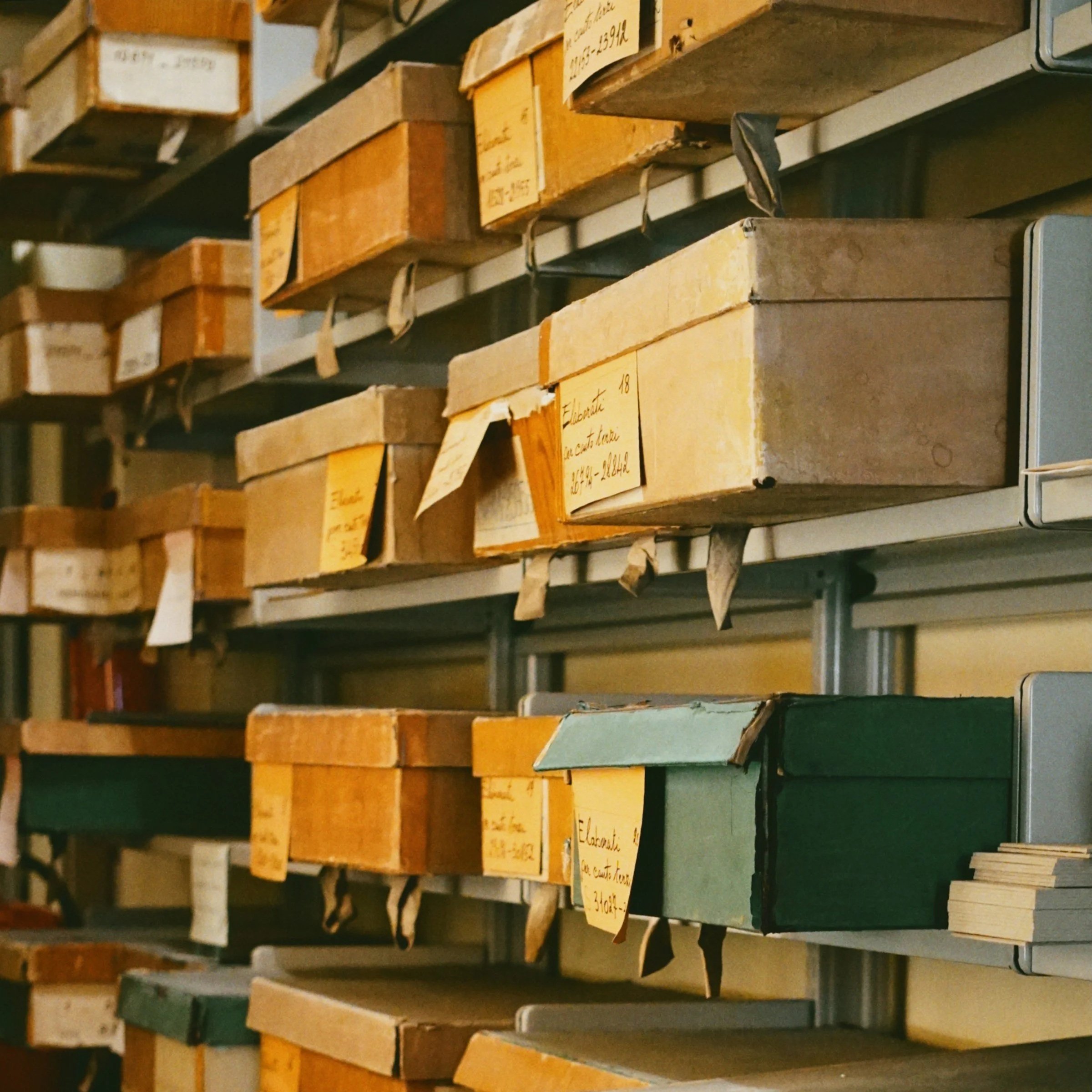
Intermediate and advanced genealogists know that there is a lot of value in more complex records like land records, court records, and citizenship papers, and these record types are less commonly digitized. Ancestry and FamilySearch do have records like this, depending on time and jurisdiction, so as a first step I’d tell beginner genealogists to familiarize themselves with those records and what you can learn from them. I’ll write more about this another time, but probate records especially are an incredible resource for family history. These are court records created when someone dies and has property and so heirs need to be located and given any inheritance or the estate might owe debts to merchants. Many probate files I’ve looked at are 40-60 pages long, and while some of it is repetitive government paperwork, sometimes you can find receipts of purchases the deceased made, lists of heirs along with their relationship to the deceased, statements or signed receipts from relatives, maps of property to be divided, and more. Explore records outside your comfort zone, and when in doubt, I always recommend the FamilySearch Wiki as a good starting point for understanding what kinds of records exist for different places and times.
Most importantly, however, learn about what records aren’t digitized for the areas you are researching. There are billions, if not trillions, of records in the world that live in archives and libraries but have never been digitized. The odds are that some percentage of records relevant to your research have not been digitized, so get out there and find them.
7. The Power of Genealogical Analysis: Evaluating Evidence vs. Gathering Records
Finally, I wish I could tell my past self that just ancestor collecting by adding people to my tree using unfounded facts or even just adding any record suggested by Ancestry isn’t the full picture of being a genealogist. The real power of a genealogist is in our analysis.
If you take courses on methodology or read books like Mastering Genealogical Proof, one of the things you learn is that there’s a difference between a source, information, and evidence. A source is just the actual document (a census, a birth registry, a draft card), information is everything that’s written or shown on the record, and evidence is information that has undergone analysis. You don’t know what a fact is evidence of if you haven’t analyzed it. And many of us do this subconsciously, even if we haven’t been trained to do it. For instance, if you looked at a census where your grandfather was 13 and you estimated his birth year based on that information, you have analyzed that into evidence of his birth year.
Where many beginner genealogists fall down with this, however, is in more sustained, purposeful analysis or analyzing more complicated cases. A good first step for improving your analysis is to utilize some sort of notetaking regarding your research. This might look like my Citations Database that I mentioned above, notes in your family tree software, a cloud-supported notetaking software like Evernote, a physical notebook, or anything else that works for you, including all of the above. To be honest, I use all of the above, depending on the purpose and subject. An example of more complex analysis is when you don’t have direct evidence of a parent for an ancestor, and you use records related to your ancestor’s siblings to compile a hypothesis of their parent. Things like this are much easier to analyze if you write them down. And as an added bonus, documenting your analysis makes it easier to jump in and out of your research without duplicating your efforts.
What is one thing you wish you’d known when you started researching your family tree? Would you be interested in seeing my Citations Database template? Leave a comment below, or if you've hit a roadblock with an elusive ancestor, explore my Research Services to see how we can tackle it together. Looking for more tips for beginner genealogists? Check out my getting started with genealogy guide.