
New Horizons for Canadian Descent: Insights on Bill C-3 and the Citizenship Process
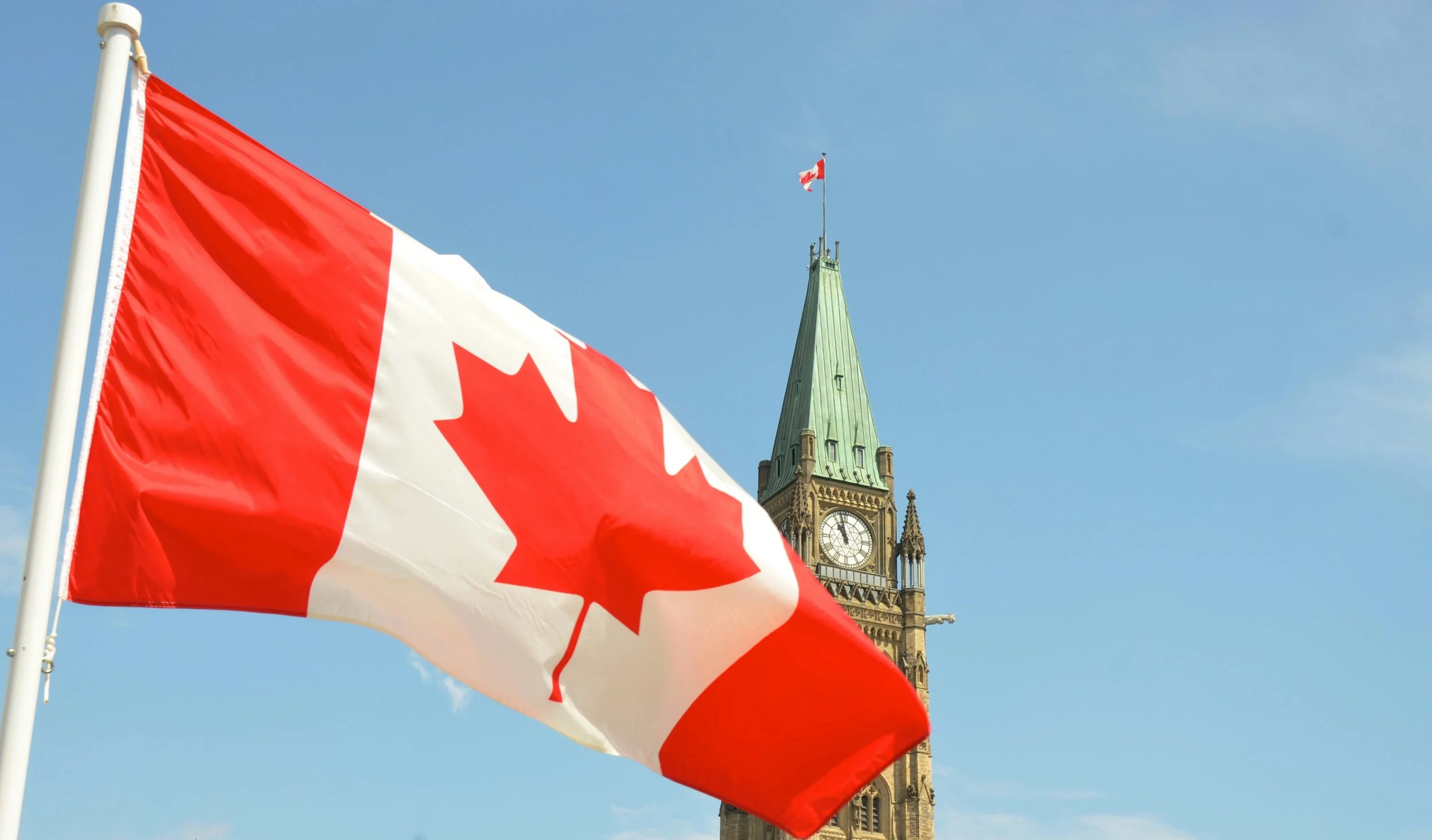
You may have seen the headlines: Canada’s citizenship laws have changed. These updates profoundly affect descendants of Canadians living abroad—especially those of us in the United States, where border crossings historically were incredibly common.
As of 15 December 2025, Bill C-3 removed the "first-generation limit" for passing down Canadian citizenship to children born outside Canada.
What does this mean for you? If you can provide the right documentation to prove your connection to a Canadian-born ancestor, the government may see you not just as a prospective citizen, but as someone who is already a citizen, with all the associated rights. You just need the papers to prove it, which starts with form CIT 0001.
Inside the APG-Canada Panel
Last night, the Canadian chapter of the Association of Professional Genealogists (APG) hosted a vital discussion featuring:
Amandeep Hayer & Lisa Middlemiss (Immigration Lawyers)
Shawn Riel (Immigration, Refugees and Citizenship Canada - IRCC)
Theresa McVean (APG-Canada Chair)
I recently submitted my own application based on my paternal great-grandfather, Joseph Asselin (born in St. Felix de Valois, Quebec in 1861). Having navigated these intricacies myself, I know how overwhelming the documentation can feel.
Note: I am a professional genealogist, not an immigration lawyer. If you require legal advice, please consult a qualified attorney. If you need help gathering records and proving relationships, that is where my expertise lies.
7 Key Takeaways for Your Application
Substance Over Certified Copies: While certified copies carry weight, Shawn Riel (IRCC) emphasized that the priority is the proof of connection. If you have a non-certified copy that is vital to proving a relationship, include it. If you have a full color reproduction of an original document and you’d have to wait months for a certified copy that is identical other than a stamp, use the reproduction unless having a certified copy will add necessary weight to your application.
No One-Size-Fits-All Roadmap: The people evaluating applications at IRCC are looking at each application on their own and weighing the full documentation for the individuals involved. Because every family journey is different, there isn't a fixed list of "Documents X, Y, and Z." Your specific evidence will depend on your ancestors' unique history.
The "Substantial Connection" Rule: This requirement only applies to those born after 15 December 2025. For those born before this date, you primarily need to prove the lineage.
Think Lineage Society Standards: One panelist compared this to a lineage society like DAR (Daughters of the American Revolution) application. Solid, primary documentation and proof of generational connections are king. In general, if your documentation follows the genealogical proof standard and shows the relevant lineage to connect you to Canada, that gives you a strong case.
No Generational Limit: Currently, there is no cap. Whether your Canadian ancestor lived there in the 1900s or the 1700s, you can apply—provided you have the paper trail to bridge the gap.
Navigating Regional Records: Accessing records varies by province. While Manitoba has long-standing civil registration since its formation, Quebec often relies on parish records (baptisms/marriages/burials) as they were used as civil records too, but this left out non-Catholic Canadians. Also, there’s the fact that you will also need records from outside of Canada, probably, to prove the full lineage. My application included records from Quebec, Michigan, and Nebraska.
Citizenship in Canada Has Always Evolved: Canadian citizenship as we know it didn't exist until 1947 (prior to that, Canadians were British subjects and before that, French subjects or First Nations). It is crucial to ensure your "Generation Zero" ancestor never formally renounced their citizenship. Since dual citizenship wasn't always allowed, a formal renunciation by an ancestor moving to the U.S. could disrupt your eligibility. That said, just because your ancestor became a naturalized U.S. citizen doesn’t mean they lost their Canadian or British citizenship.
Final Thoughts: Don't Self-Select Out
The panel’s biggest piece of advice? If you think you qualify and your proof is solid and connects you to a Canadian ancestor, apply.
Navigating these repositories is complex, but you don't have to do it alone. Whether it’s crafting a genealogical proof argument to prove a connection or hunting down records in Quebec, Ontario, or the United States, I’m here to help.